


Abs Injection Molding
What is a ABS Injection Molding?
ABS Injection Molding is a process used to create plastic parts from ABS (Acrylonitrile Butadiene Styrene) plastic. In this process, the ABS plastic is heated until it becomes a molten liquid, then it is injected under high pressure into a mold cavity. The plastic then rapidly cools and solidifies into the shape of the cavity, creating the desired part. This process is ideal for producing large quantities of parts with a consistent shape and quality. ABS is a popular material for this process due to its toughness, rigidity, and resistance to impact, heat, and chemicals.
Why Choose Us?
Professional Team: Our company has a professional team of engineers and sales, with over 15 years of technical expertise and rich manufacturing, design, research and development experience and technical capabilities in the engineering plastic industry.
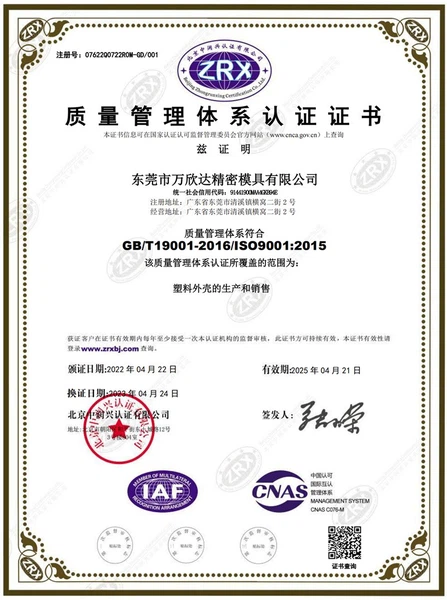
Advanced Equipment: We have a complete set of efficient production equipment and advanced CNC machine tools, Obtained ISO quality management system in April 2022. We have developed and accumulated rich experience in research and production in the electronic product industry.
Customized services: We listen to our clients objectives and aspirations and therefore provide customize solutions.
Quality Control: We have professional personnel to monitor the production process, inspect the products and ensure that the final product meets the required quality level standards, guidelines and specifications.


Benefits of ABS Injection Molding
ABS is a versatile thermoplastic material that can be easily molded into various shapes and sizes. It is known for its excellent strength, impact resistance, and high ductility. This makes ABS suitable for a wide range of applications, including automotive components, consumer goods, electronic enclosures, and more.
ABS injection molding is a cost-effective production method, especially for large-volume manufacturing. The process allows for high production rates and short cycle times, resulting in lower production costs. Additionally, ABS resin is relatively inexpensive, further contributing to cost savings.
ABS injection molding offers great design flexibility, allowing for the creation of complex geometries and intricate details. It can be easily molded into different shapes, sizes, and textures, meeting the specific needs of various products. ABS also supports a wide range of finishes, including gloss, matte, and textured surfaces.
ABS injection molding delivers products with excellent surface finishes, reducing the need for additional finishing processes. This is particularly beneficial for applications that require aesthetic appeal, such as consumer electronics or cosmetic packaging. The ability to achieve consistent and smooth finishes enhances the overall quality of the product.
ABS offers a balance of mechanical properties that make it suitable for demanding applications. It possesses good tensile strength, impact resistance, and thermal stability. ABS products can withstand high temperatures, making them suitable for many industrial environments.
ABS is known for its excellent chemical resistance, making it a suitable choice for applications involving exposure to chemicals or harsh environments. It can resist many chemicals, including acids, alkalis, oils, and greases, ensuring the durability and longevity of the product.
ABS is a lightweight material, which is advantageous for industries where weight reduction is crucial. Its low density allows for the production of lightweight components without compromising on strength or performance. This makes ABS injection molding ideal for applications in the automotive, aerospace, and consumer electronics industries.
Types of ABS Injection Molding
1. Injection Molding
This is the most common and widely used method for ABS injection molding.The process involves melting the ABS material and injecting it into a mold at high pressure.The mold is then cooled to solidify the ABS and is opened to remove the finished product.
2. Two Shot Injection Molding
Also known as two-component injection molding.This method allows for the simultaneous injection of ABS and another material into the mold.It enables the production of products with multiple colors or materials in one molding cycle.This process is often used for creating ABS products with soft-touch or rubberized areas.
3. Overmolding
Overmolding involves molding a layer of ABS over a preexisting component or substrate.This technique is commonly used to improve the appearance, grip, or durability of products.The process requires a separate mold for the substrate and another mold for the ABS layer.
4. Insert Molding
In insert molding, metal or plastic inserts are placed into the mold before injecting the ABS material.The molten ABS material then surrounds the inserts, creating a strong bond.This method is often used to add features or functionality to the product, such as threaded inserts or electronic components.
5. Micro Molding
Micro-molding involves the production of small and intricate ABS parts.This precise molding process is used for manufacturing products in industries like electronics and medical devices.It requires specialized equipment and techniques to achieve high accuracy and precision.
6. Gas Assisted Injection Molding
This method uses a combination of melted ABS and gas pressure to form hollow features or channels within the product.The gas is typically nitrogen, which is injected into the mold after the ABS material.The gas displaces the molten ABS, creating a hollow section with a uniform wall thickness.
7. Co injection Molding
Co-injection molding, also known as sandwich molding or multi-shot molding, involves injecting multiple materials simultaneously.This method allows for the combination of ABS with other materials, such as a foam or rubber core.Co-injection molding is used to create products with enhanced properties, such as improved insulation or cushioning.
Application of ABS Injection Molding



In the automotive industry: ABS injection molding is used to produce various interior and exterior parts such as dashboards, door panels, bumper covers, and grilles. ABS is chosen for these applications because it is lightweight, impact-resistant, and can withstand various weather conditions.
Electronics industry: ABS injection molding is also commonly used in the electronics industry for manufacturing items like computer and television housings, keyboards, and phone cases. ABS provides good electrical insulation, which makes it suitable for these applications.
Household appliances: Such as washing machine and refrigerator parts, are often made using ABS injection molding. The material's resistance to chemicals and humidity makes it ideal for these products.
Medical industry: ABS injection molding is widely employed in the medical industry for producing equipment and devices such as syringe barrels, medical trays, and housing for medical devices. ABS offers good sterilization capabilities and can withstand repeated cleaning.
Toy industry: The toy industry extensively utilizes ABS injection molding to produce a wide range of plastic toys. ABS's ability to be easily colored and its impact resistance make it a preferred material for toy manufacturing.
Construction industry: ABS injection molding is also used in the construction industry to create fittings, wall panels, and pipes. The material's rigidity, strength, and resistance to chemicals and UV rays make it suitable for these applications.
Sports and leisure: The sports and leisure industry employs ABS injection molding in the production of items like helmets, protective gear, and sports equipment. ABS's lightweight and impact-resistant nature ensure safety and durability in these products.
Furniture industry: The furniture industry utilizes ABS injection molding for manufacturing items such as chairs, tables, and cabinets. ABS offers good scratch resistance and can be easily molded into desired shapes and designs.
Packaging industry: ABS injection molding is also commonly used in the packaging industry for producing containers, bottles, and caps. ABS provides good chemical resistance and can be made transparent for better visibility.
Material of ABS Injection Molding
ABS (Acrylonitrile Butadiene Styrene): ABS is a commonly used thermoplastic material for injection molding.ABS offers a good combination of strength, impact resistance, and temperature resistance, making it suitable for a wide range of applications.One of the main advantages of ABS is its ease of processing. It can be injection molded with relatively low pressure and temperature, which reduces cycle times and energy consumption.ABS has excellent dimensional stability, meaning that the parts molded from ABS will maintain their shape and size under different temperature and humidity conditions.ABS can be easily colored during the injection molding process, allowing for a wide range of design options and customization.
Components of ABS Injection Molding
ABS resin: ABS (Acrylonitrile Butadiene Styrene) is a commonly used thermoplastic polymer that is used as the main material for injection molding. It is known for its high impact resistance, good heat resistance, and excellent mechanical properties.
Injection molding machine: This is the crucial equipment used in ABS injection molding. The machine consists of a barrel, plunger, heating elements, and a mold cavity. The ABS resin is heated and melted in the barrel before being injected into the mold cavity.
Mold: The mold is an essential component in ABS injection molding. It determines the shape and size of the final ABS product. The mold is typically made of steel and consists of two halves, a core, and a cavity. It is designed to allow the melted ABS resin to cool and solidify into the desired shape.
Injection unit: The injection unit is responsible for melting the ABS resin and injecting it into the mold cavity. It consists of a barrel, screw, and plunger. The ABS resin is fed into the barrel, where it is heated and melted by the screw's rotation. The plunger then pushes the molten ABS resin into the mold cavity to take its shape.
Cooling system: After the ABS resin is injected into the mold cavity, it needs to be cooled and solidified. A cooling system, typically consisting of cooling channels within the mold, helps in rapidly cooling the molten ABS resin. Cooling is crucial to ensure the final ABS product has the desired shape and dimensions.
Ejector mechanism: Once the ABS product has cooled and solidified, it needs to be ejected from the mold cavity. The ejector mechanism consists of ejector pins or plates that push the product out of the mold. This allows for easy removal of the finished ABS product.
Control system: The control system is essential for monitoring and controlling various parameters during the ABS injection molding process. It ensures accurate temperature control, pressure control, and timing control. This helps in achieving consistent and high-quality ABS products.
What Are the ABS Injection Molding Techniques?

Thin Walled Parts
ABS has a relatively high viscosity, and as such injection pressures must be increased for thin-walled parts. Beyond its plasticizing temperature, the viscosity of ABS will increase with increased temperature. As such, only pressure can be increased for thin-walled parts. Molds must be specifically designed to handle these increased pressures.

Large Hollow Parts
Injection molding large, thin, or hollow parts is challenging. It may be beneficial to make use of water-assisted or gas-assisted injection molding which allows for the manufacture of large, thin-walled, or hollow parts. This technique uses high-pressure water or gas to press the molten plastic against the sides of the mold to produce uniform thickness and smooth internal volumes.

Thick-Walled Parts
Manufacturing thick-walled parts with standard injection molding techniques can produce sink marks on the part. One method of getting around this is to make use of compression injection molding, which essentially deposits a specific amount of molten plastic into a mold to produce the final part. This technique also reduces internal stresses typical with injection molding. Alternatively, sink marks can be managed with thinner (or more uniform) mold walls or increased thermal transfer capacity in the mold.

Multi Material
If multi-material components are required, then techniques such as insert molding or overmolding can be used. ABS is often used for industrial tooling like cordless drills, which have their handles overmolded onto the ABS to improve tool grip.
Considerations in ABS Plastic Injection Molding Process
1.Consider ABS Plastic Parts Design
The wall of the plastic parts design must be uniformly thick such that there is a 25% range of diversification between the wall thicknesses of the part. Prevention of massive stress is possible when the thickness of the wall is uniform. There is a need for extra ribs or radii to enhance the strength and snap.
2.Dry ABS Material Before Processing
ABS plastic will absorb water whenever it is present in the processing material. Thus, ensuring a thorough drying of the material before processing is crucial. Many problems will result from ABS plastic absorbing moisture. The major issues are increased operating costs and more time spent in the process. Likewise, failure to take off the water will lead to the molded parts becoming cloudy.Although when storing and transporting a heat-resistant ABS resin, absorption of water from the atmosphere will occur. The range of the moisture absorption is within 0.2% to 0.4%. However, before processing the ABS plastic molding, the moisture content needs to reduce drastically to 0.05% or less. This will help prevent injection molding defects during the process. The temperature at which drying take place is 80-95 ℃, and it will take three to four hours for completion.
3.Molding Temperature Control
Another consideration for ABS injection molding is temperature control because overheating of the plastic ABS can lead to thermal decomposition. If manufacturers apply excessive heat to the material, the chemical bonds break. As a result, brown granules on injected molded parts will occur. The temperature control problem is mostly unavoidable when using old equipment with poor temperature control.However, the molding temperature needs to be high when the injected molded ABS parts contain high gloss and ensure not to damage the material in the process. Therefore, when using ABS plastic with the mold, the temperature is higher than other materials used in processing. The recommended temperature range is between 180-230 ℃. Likewise, the higher the temperature, the less time you should expose the plastic to such temperature to prevent degradation.
4.Injection Pressure
Unlike other injection molding materials, the high injection pressure is necessary for ABS plastic due to its viscosity. This may not apply to a simple, minor, or thick product. However, an excessive increase in the injection pressure can cause molded parts to stick together due to the increased friction.
5.Injection Molding SpeedConsiderations in ABS Plastic Injection Molding Process
The injection speed is also crucial to ensure the top-notch final products. Excessive injection speed will cause burning or thermal decomposition of the plastic material. Also, poor glossiness, weld lines, and discoloration are some problems resulting from an overly increased speed.
Certifications




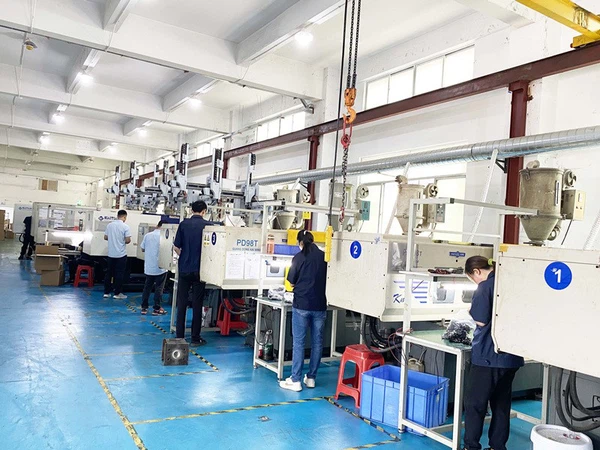
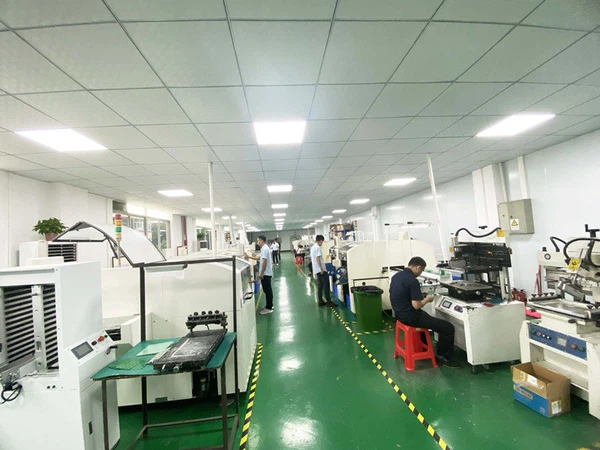
Our Factory
Our company has a professional team of engineers and sales, with over 15 years of technical expertise and rich manufacturing, design, research and development experience and technical capabilities in the engineering plastic industry, supporting personalized customization. We have a complete set of efficient production equipment and advanced CNC machine tools.


Frequently Asked Questions ABS Injection Molding
Q: Is ABS suitable for injection Moulding?
Q: What is the temperature for ABS injection molding?
Q: What are five common problems with injection molding of plastic parts?
Sink Marks in a plastic insert.
Warpage of a finished part.
Burn mark in a plastic part.
Short shots of a bottle cap.
Q: What temp does ABS start to deform?
The parts molded in ABS begin to deform (point of inflection under load) at about 100 ° C; ABS has a lower coefficient of friction than other materials and requires less force during extrusion; It resists impacts; It resists heat.
Q: What size gate for ABS?
Q: What is ABS injection molding?
Q: What are the advantages of ABS injection molding?
Q: What are the applications of ABS injection molding?
Q: What is the difference between ABS and other plastics used in injection molding?
Q: What is the process of ABS injection molding?
Q: Materials preparation
Injection
The molten ABS is injected into a mold cavity under high pressure.
Cooling
The mold is cooled to allow the ABS to solidify.
Ejection
The finished part is ejected from the mold.
Q: What are the factors that affect the quality of ABS injection molding?
Q: The type and quality of the ABS material used.
The temperature and pressure of the injection process.
The cooling rate and time.
The ejection process and the removal of the finished part from the mold.
Q: What is warpage in ABS injection molding?
Q: How can warpage be prevented in ABS injection molding?
Q: Using a uniform and balanced mold design.
Adjusting the injection pressure and speed to reduce the occurrence of stress and warpage.
Using a higher melting temperature ABS material to improve the flow behavior of the material.
Q: What is short shot in ABS injection molding?
Q: How can short shot be prevented in ABS injection molding?
Q: Checking the material feed and ensuring that there is enough material to fill the mold cavity.
Cleaning the nozzle and checking that it is not blocked or clogged.
Optimizing the design of the mold and the gate system to improve the flow behavior of the material.
Q: At what temp will ABS plastic melt?
Q: How do you prevent air traps in injection molding?
Q: How do you prevent voids in injection molding?
Q: How do you prevent cold slugs in injection molding?
Q: Is abs plastic or rubber?
Acrylonitrile, polystyrene, and butadiene.
We're professional abs injection molding manufacturers and suppliers in China, specialized in providing high quality customized service. We warmly welcome you to wholesale cheap abs injection molding made in China here from our factory. Contact us for quotation.
Abs Plastic Molding Manufacturers, Polyethylene Injection Molding, Recycled Plastic Injection Molding